
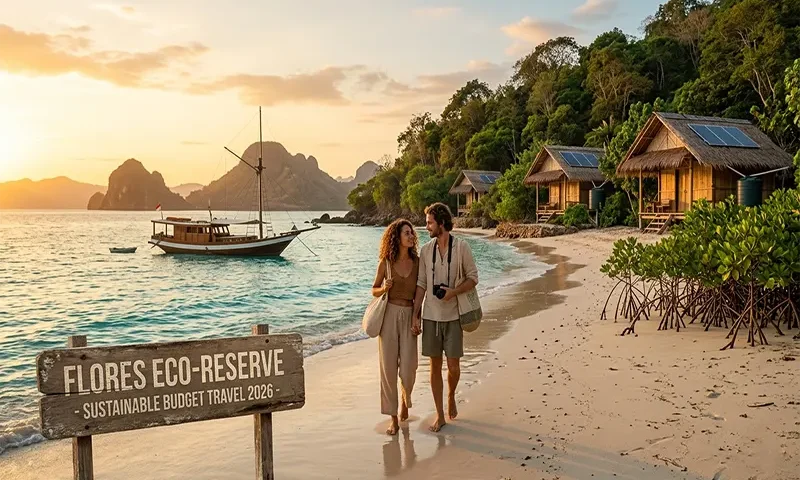
In 2026, the travel industry has moved beyond the simple “leave no trace” philosophy. We have entered the era of Regenerative Tourism, where the goal is to ensure your presence actually improves the destination’s social and environmental health. For the budget traveler, this is a golden era. You no longer need to pay a premium for a “luxury eco-resort” to save the planet. Instead, the most sustainable experiences are often found in community-led homestays, local conservation projects, and slow-travel regions that prioritize the earth over excessive infrastructure.
Sustainable travel in 2026 is about high impact and low cost. Here are the premier global destinations where your budget goes further and your footprint stays small.
1. Caye Caulker, Belize: The “Go Slow” Island
Belize has long been a leader in marine conservation, but Caye Caulker remains its most accessible gem for the eco-conscious backpacker.
- The “Green” Factor: The island is famous for its “Go Slow” mantra, which translates into a ban on cars and a heavy reliance on bicycles and walking. The Caye Caulker Marine Reserve is managed by local guides who enforce strict “no-touch” policies on the reef.
- The Budget Reality: Locally-run guesthouses cost $40–$70 per night. Street food stalls offer incredible, sustainably caught seafood for under $15.
- Sustainable Activities: Kayak through the mangroves to spot seahorses or join a “Plastic Cleanup” paddle where local shops trade gear rentals for a bag of collected ocean debris.
2. The Azores, Portugal: Europe’s Carbon-Negative Archive
This mid-Atlantic archipelago is the first ever to be certified as a “Sustainable Tourism Destination” under the GSTC criteria.
- The “Green” Factor: The Azores utilize a mix of geothermal, wind, and hydroelectric power. In 2026, the regional government launched a “Green Tax” on all flights, which is funneled directly into massive endemic reforestation projects across the nine islands.
- The Budget Reality: While the flights can be pricey, the islands themselves are affordable. High-quality hostels and “Quintas” (farm stays) average $35–$60.
- Sustainable Activities: Hike the vast network of free, well-maintained trails. Visit the Cozido das Furnas, where meals are cooked underground using natural volcanic heat—the ultimate zero-carbon kitchen.
3. Madidi National Park, Bolivia: Biodiversity on a Budget
Madidi is arguably the most biodiverse protected area on Earth. While the Brazilian Amazon has become increasingly commercialized, Madidi offers a raw, community-led alternative.
- The “Green” Factor: The park’s tourism is largely run by Indigenous communities like the Uchupiamonas. By staying in their eco-lodges, your money directly prevents illegal logging and gold mining by providing an alternative local economy.
- The Budget Reality: All-inclusive 3-day eco-tours, including food and lodging, can be found for $250–$350, significantly cheaper than similar experiences in neighboring countries.
- Sustainable Activities: Engage in “Citizen Science” by using 2026 biodiversity apps to log bird and orchid sightings for local conservation databases.
4. Lombok, Indonesia: The Bamboo Revolution
As Bali faces the challenges of over-tourism, its neighbor Lombok has doubled down on regenerative growth, specifically focusing on sustainable architecture and mountain conservation.
- The “Green” Factor: The rise of “Bamboo Villages” in the north provides low-impact housing for travelers. The Mount Rinjani Geopark has implemented a “Pack-In, Pack-Out” incentive program where hikers receive a partial refund on their trekking permit if they return with their trash.
- The Budget Reality: Beautiful bamboo homestays and surf camps cost $20–$45 per night. Local “Warungs” (eateries) serve plant-based Indonesian staples for $3–$5.
- Sustainable Activities: Visit the Tetebatu village for a walking tour of organic vanilla and cocoa farms that utilize ancient, chemical-free irrigation techniques.
5. The Julian Alps, Slovenia: The Rail-First Frontier
Slovenia has consistently been ranked as the most sustainable country in the world, and in 2026, it is the gold standard for “Green Rail” travel.
- The “Green” Factor: Slovenia’s “Green Scheme” labels every accommodation and park based on its environmental audit. In 2026, the country launched an integrated electric rail and bus pass that makes car rentals unnecessary for mountain access.
- The Budget Reality: Mountain huts (Koča) offer a bed and a hearty stew for $35, while “Green-certified” hostels in Ljubljana cost $30.
- Sustainable Activities: Explore Triglav National Park via the electric shuttle system. The park’s “Silent Zones” encourage travelers to hike without digital noise, protecting the local wildlife’s natural habitat.
The 2026 Eco-Budget Toolkit
To travel sustainably on a budget this year, you need the right digital and physical tools:
- AI Carbon Tracking: Use 2026 travel apps that don’t just “estimate” carbon but track your real-time footprint based on the specific aircraft model and local transit you use. These apps suggest the highest-impact “Gold Standard” offsets for as little as $5 per trip.
- The “Stay-to-Give” Model: When booking, prioritize guesthouses that charge a “Nature Fee.” In 2026, many budget homestays in Indonesia and Bolivia include this small ($1–$2) fee which goes directly to local land trusts to buy and protect surrounding forests.
- Plastic-Free Essentials: The 2026 budget kit includes a high-efficiency portable solar charger and solid toiletries. Not only do solids save space in your carry-on, but they ensure no microplastics or chemicals enter the sensitive water systems of places like the Azores or Belize.
Summary: 2026 Green-Value Comparison
| Destination | Primary Eco-Focus | Avg. Daily Spend | Best Low-Impact Activity |
| Caye Caulker | Marine Protection | $65 | Kayaking & Reef Monitoring |
| The Azores | Geothermal Energy | $85 | Volcanic Cooking & Trekking |
| Madidi | Indigenous Sovereignty | $55 | Guided Jungle Immersion |
| Lombok | Bamboo Architecture | $40 | Rinjani Trekking (Waste-Conscious) |
| Julian Alps | Electric Rail / Green Certification | $75 | Mountain Hut-to-Hut Hiking |
Eco-tourism is no longer a luxury niche; it is the responsible standard for the modern budget traveler. By choosing destinations like Slovenia or the Azores, you are voting with your wallet for a world where travel heals the land instead of depleting it. Remember: The most sustainable trip is the one where you stay longer, move slower, and engage deeply with the local community.

